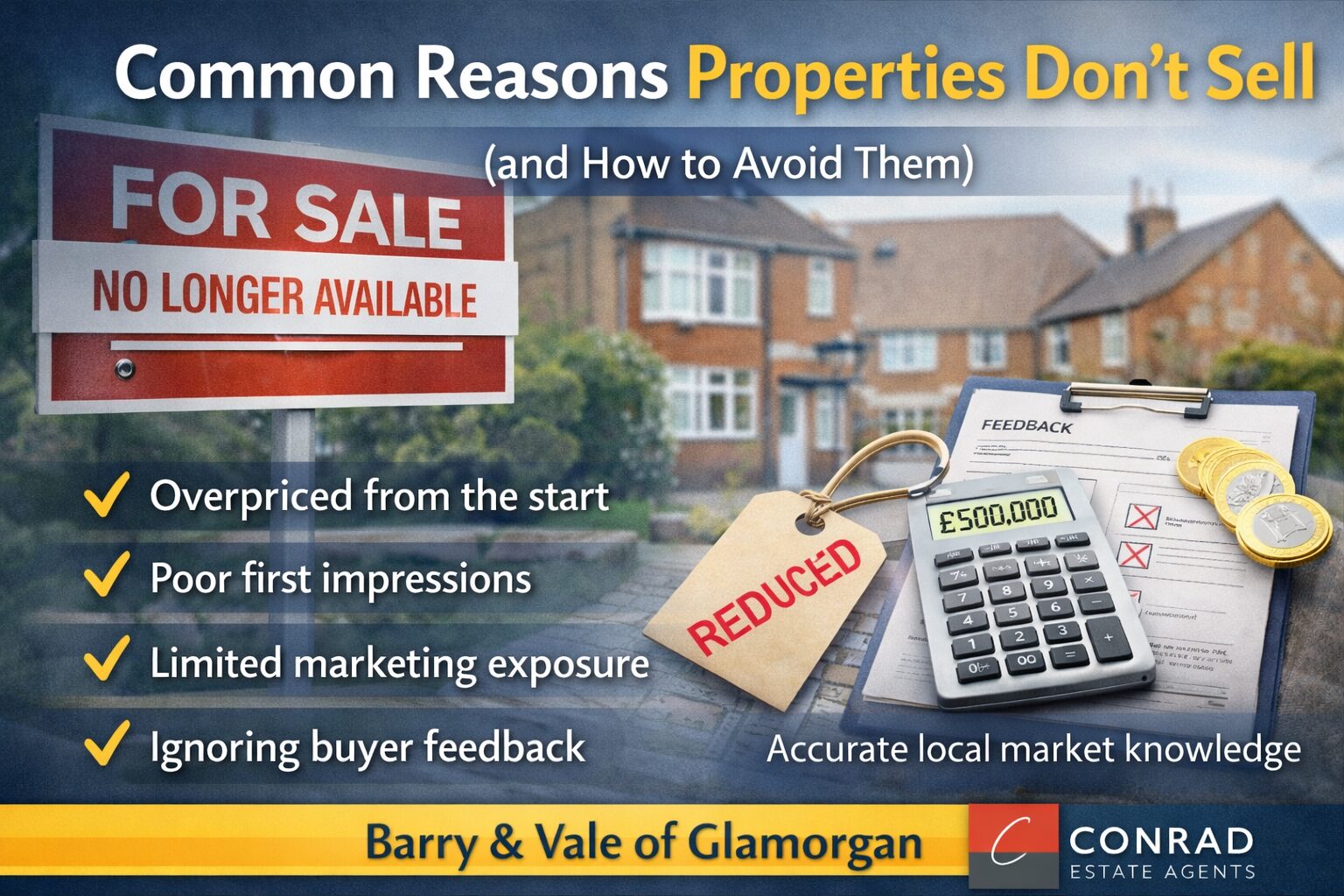
When a property doesn’t sell, it’s rarely down to bad luck. In most cases, there are clear, avoidable reasons buyers aren’t engaging or making offers.
Understanding these factors and addressing them early can make the difference between a smooth sale and months of frustration.
Overpricing from the outset
The most common reason properties fail to sell is simple: they’re priced too high.
Buyers are well-informed and compare properties instantly online. When a home is overpriced:
-
It receives fewer viewings
-
It’s dismissed quickly
-
It often ends up being reduced later
Unfortunately, price reductions can erode buyer confidence and lead to a lower final sale price than if the property had been priced correctly from the start.
How to avoid it:
Base pricing on recent sold evidence and current buyer demand, not just asking prices or online estimates.
Poor first impressions
First impressions now happen online, not at the front door.
If photography, descriptions, or presentations don’t accurately reflect the property, buyers simply scroll past.
Common issues include:
-
Dark or cluttered photos
-
Weak or generic descriptions
-
Untidy rooms or external areas
How to avoid it:
Invest in high-quality photography, declutter thoroughly, and ensure the marketing clearly highlights the property’s best features.
Lack of marketing exposure
Even well-priced, well-presented homes won’t sell if buyers don’t see them.
Limited portal exposure, poor-quality listings, or a lack of follow-up can all reduce interest.
How to avoid it:
Ensure your property is marketed professionally across major portals, supported by proactive buyer follow-up and viewing feedback.
Ignoring buyer feedback
Buyer feedback is invaluable. Repeated comments often point to an issue that needs to be addressed, whether it’s pricing, presentation, or layout.
Ignoring feedback can result in missed opportunities.
How to avoid it:
Review feedback objectively and be prepared to make informed adjustments early.
Restricted viewings
Limiting viewing availability can significantly reduce buyer interest.
Properties that are difficult to view often lose momentum, especially in competitive markets.
How to avoid it:
Offer flexible viewing times where possible and ensure access doesn’t become a barrier.
Choosing the wrong strategy or advice
Not all advice is equal. Generic pricing or marketing strategies don’t always work locally.
How to avoid it:
Work with an agent who understands buyer behaviour in your specific area and can adapt the approach accordingly.
Most properties can sell when they are priced correctly, marketed properly, and supported by the right strategy.
If your property hasn’t sold, or you want to avoid common pitfalls before going to market, early guidance can save time, stress, and money.