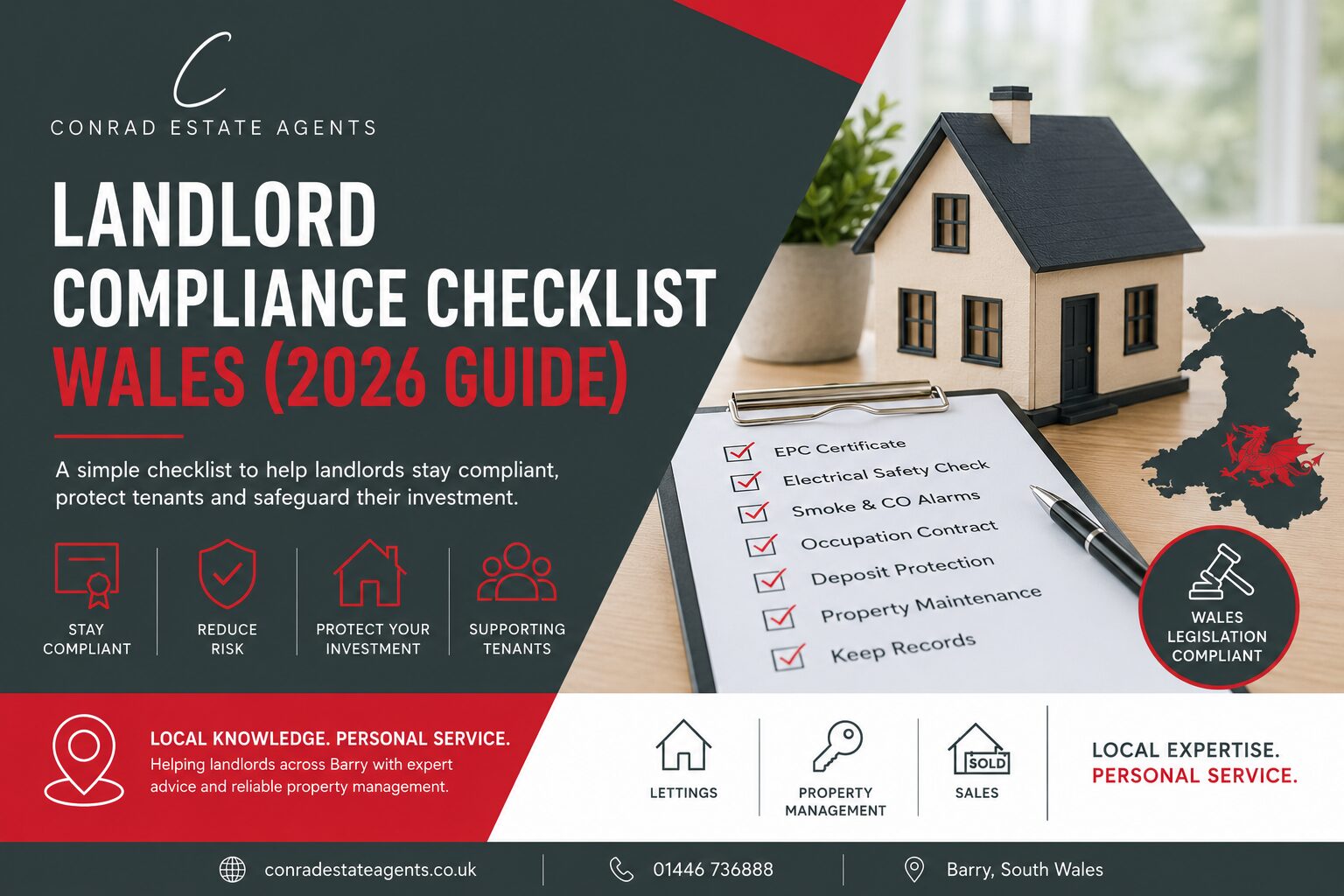
Being a landlord involves much more than finding tenants and collecting rent. Landlords across Wales now face increasing responsibilities and evolving legislation, making compliance essential to successfully managing a rental property.
Failing to meet legal obligations can potentially lead to delays, disputes and unnecessary costs. Whether you own a single buy-to-let property or a growing portfolio, understanding your responsibilities is important.
This guide outlines key compliance areas that landlords in Wales should consider in 2026.
Why Landlord Compliance Matters
Compliance requirements are designed to improve tenant safety and ensure rental properties meet legal standards.
Keeping a property compliant can help:
- Protect tenants
- Reduce legal risks
- Prevent delays during tenancies
- Maintain property standards
- Protect your investment
Many landlords find it challenging to keep up with changing requirements, particularly when managing several properties.
Energy Performance Certificates (EPC)
Rental properties require a valid EPC before being marketed to potential tenants.
An EPC provides information regarding:
- Energy efficiency
- Estimated running costs
- Potential improvements
Landlords should ensure certificates remain valid and up to date.
Electrical Safety Checks
Electrical safety remains an important part of managing rental properties.
Regular checks can help identify:
- Faulty wiring
- Potential hazards
- Maintenance requirements
Keeping records of inspections and completed work is good practice.
Smoke and Carbon Monoxide Alarms
Landlords should ensure appropriate alarm systems are installed and maintained.
Typical considerations include:
- Smoke alarms
- Carbon monoxide alarms
- Testing procedures
- Ongoing maintenance
Safety equipment should remain operational throughout the tenancy.
Occupation Contracts in Wales
Under Welsh legislation, landlords should ensure tenancy agreements comply with current requirements.
Landlords should understand:
- Required terms
- Tenant rights
- Responsibilities
- Contract obligations
Keeping documentation organised can help avoid issues later.
Deposit Protection
Where required, deposits should be handled correctly and protected appropriately.
Landlords should ensure:
- Deposits are registered correctly
- Documentation is supplied
- Records are retained
Property Maintenance Responsibilities
Maintaining a property is not simply good practice; it also helps protect long-term investment value.
Landlords should regularly review:
- Heating systems
- Plumbing
- Roofing
- General property condition
- Safety concerns
Promptly addressing issues can often prevent larger problems later.
Compliance Checklist for Landlords
Use this simple checklist:
✅ Valid EPC
✅ Electrical safety checks completed
✅ Smoke alarms installed
✅ Carbon monoxide alarms installed where required
✅ Occupation Contract compliant
✅ Deposit correctly protected
✅ Maintenance up to date
✅ Records stored safely
Final Thoughts
Compliance requirements continue evolving, and keeping up with responsibilities can sometimes feel overwhelming.
Having a structured process in place can help landlords remain organised and reduce unnecessary stress.
Looking for Property Management in Barry?
Managing compliance alongside day-to-day property responsibilities can become time-consuming. Conrad Estate Agents can help landlords with property management and ongoing support throughout the tenancy process.